PeakedLabs Research Series · Ebook + workbook
Understand the evidence, the provider, and the full cost before you choose peptide therapy.
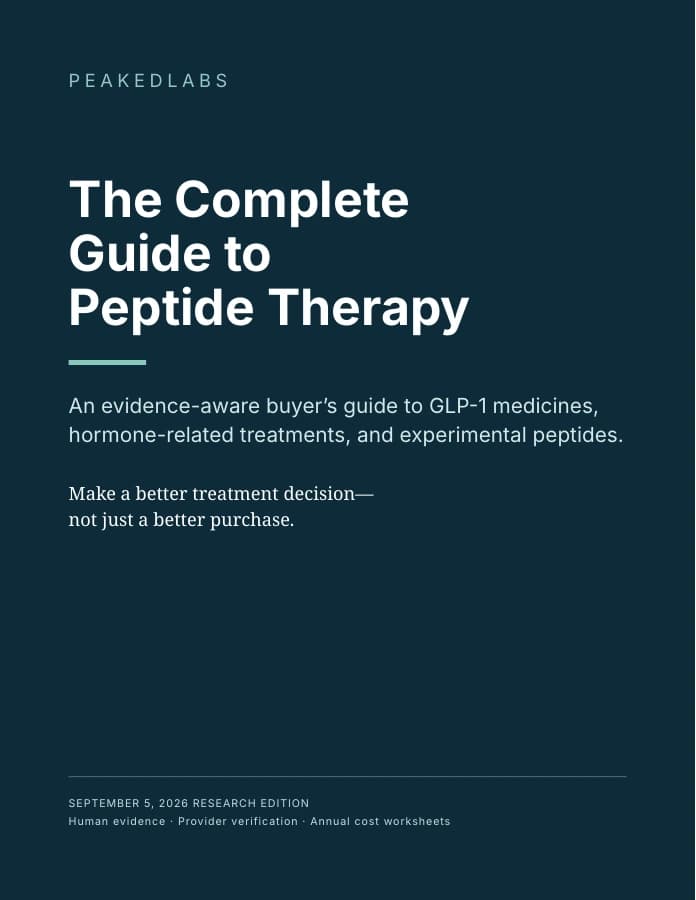
Make sense of approved medicines and experimental claims. Compare the care you will receive, verify the pharmacy behind the brand, and work through the full annual cost with practical examples and eight worksheets you can bring to an appointment.
- Length
- 69 pages, 13 chapters
- Format
- PDF + printable workbook
- Edition
- September 2026
One-time purchase. 69-page ebook and eight-page workbook. Secure checkout via Stripe.
What's inside
Thirteen chapters, eight practical worksheets
Read in order or jump straight to the worksheets: the guide is built to be carried into a clinician appointment, not just read once.
- 01
Start with a decision, not a molecule
Define the outcome that matters, compare alternatives, and write a useful decision brief.
- 02
Read the evidence without becoming a scientist
Interpret trial results, absolute versus relative effects, surrogate markers and population differences.
- 03
The US regulatory map
Separate approved products, off-label use, compounding, investigational treatments and research-use-only materials.
- 04
GLP-1 medicines
Compare current oral and injectable options, landmark trials, maintenance and practical access questions.
- 05
Growth-hormone claims and the TRT boundary
Understand tesamorelin, CJC-1295, ipamorelin and testosterone through their distinct evidence and indications.
- 06
Injury and recovery peptides
Examine BPC-157, TB-500, KPV, MOTs-C and AOD-9604 claims against the research that actually supports them.
- 07
Sexual health, sleep, cognition, skin and longevity
A goal-by-goal look at PT-141, DSIP, Selank, Semax, epitalon and GHK-Cu.
- 08
Baseline assessment and monitoring
Ask which clinical question each test answers and agree on who reviews results and what changes the plan.
- 09
Prescription literacy
Recognize conflicting product instructions, formulation changes, storage questions and continuity gaps.
- 10
Adverse events and next actions
Distinguish emergency help, prompt assessment, routine follow-up and product-quality reporting.
- 11
Verify the provider, pharmacy and product
Check licenses, dispensing arrangements, compounding claims, COA limitations, records and cancellation terms.
- 12
Calculate the real annual cost
Three worked examples cover promotional pricing, insurance changes and 28-day versus calendar-month billing.
- 13
A useful clinician conversation
Use decision scripts, follow-up examples and eight printable worksheets to put the research to work.
69 pages · 59 linked sources · eight worksheets · $29 once.
From Chapter 12 · Calculate the real annual cost
“A spreadsheet cannot fix a mismatched comparison. First compare appropriate options; then compare the money.”
One worked example shows how a lower introductory medication quote can lead to $1,265 more in annual costs once membership, shipping and later pricing are included. These are explicitly hypothetical prices, with every calculation shown.
Read the free three-page sample: cover, contents and cost exampleBuy it if
This guide earns its price when
- You are evaluating peptide therapy with a licensed clinician and want the homework done before the consultation.
- You are already receiving care and want better questions about monitoring, changing pharmacies, follow-up and renewal costs.
- You are comparing clinics and want to pressure-test their pricing, lab requirements, and refill terms with specific questions.
Skip it if
Save your $29 when
- You want sourcing shortcuts for research chemicals without clinician oversight. The guide argues directly against that.
- You want a promise of results. The evidence for several popular peptides is preclinical or mixed, and the guide says so compound by compound.
- You are a clinician looking for a primary-literature review. This is a structured decision guide for patients, with references — not a meta-analysis.
Questions
Before you buy
- Price
- $29, one-time
- Format
- 69-page PDF
- Delivery
- Download after confirmed payment
- Edition
- September 5, 2026
Is this medical advice?
No. This is educational research for adults preparing a clinician conversation. It discloses AI research assistance and has not undergone independent licensed physician or pharmacist review. No medical-review credentials are claimed.
Which peptides does it actually cover?
GLP-1 medicines and compounds including BPC-157, TB-500, CJC-1295, ipamorelin, tesamorelin, AOD-9604, KPV, MOTs-C, DSIP, epitalon, PT-141 and GHK-Cu. Each category is discussed with its own evidence and product-status limits.
Does it cover GLP-1s like semaglutide?
Yes. The September edition adds a full GLP-1 chapter covering current approved options, trial interpretation, oral versus injectable treatment, maintenance and access questions.
I'm already on a protocol. Is it still useful?
Chapters 8–13 cover monitoring questions, prescription literacy, adverse events, provider verification, annual costs and renewal decisions. The workbook includes an appointment agreement and follow-up record.
How is this different from your free articles?
The blog covers individual topics. The ebook connects the evidence, product status, provider checks and full costs in one place, with three worked cost examples and eight worksheets. A separate printable workbook is included.
How do I get it, and how current is it?
Checkout runs through Stripe. After payment is confirmed, the success page provides your ebook and workbook downloads, and a delivery email is requested. The research cutoff is September 5, 2026. Existing verified buyers can use their purchase link to get the updated edition.
The newsletter
Not ready to buy yet?
Get the free provider decision toolkit — cost tools, comparison questions and research updates. The paid ebook is a separate purchase.
Free forever. Unsubscribe anytime. We never sell your email.
Make your next provider conversation more useful. Bring the evidence, the questions, and a realistic budget.
This guide is for educational purposes only and is not medical advice, diagnosis, or treatment. It does not establish a clinician-patient relationship. Several peptides discussed are not FDA-approved for general human use. Always review options with a licensed clinician who can evaluate your history, medications, labs, and risk profile.